 James Crawford
Key Takeaways
- A bearing rumble rises and falls with spin speed — a rattle that sounds the same at every speed is something trapped between the drums, not a bearing.
- The part is cheap and the access is not: nearly the whole bill is the hours needed to reach the back of the outer tub.
- On many Samsung front-load models the bearing comes pressed into the tub assembly, which is what separates a bearing job from a tub job.
- Waiting adds the seal, the spider arm, and the shock absorbers to the same repair, so the cost grows while the noise does.
- A drum that tilts when you rock it by hand, plus a rust trail under the tub, is the pair of signs that settles it.
The Bottom Line
A bearing that rumbles today is a bearing, a seal, and a spider arm by next season. Get it measured while it is still one part, and compare the written estimate against a replacement machine before deciding.
The noise starts small. A faint rumble on the spin, the kind you only hear from the next room. A few months later the machine sounds like a jet on the rinse, the laundry room floor buzzes, and somebody finally types the question into a search box. A Samsung washing machine drum bearing replacement cost is the most expensive routine repair on a front-load machine, and it is also the one where waiting makes the number worse rather than better.
| What is making the noise | How it sounds | Parts and labor |
|---|---|---|
| Object trapped between drums | Rattle or scrape at any speed | from $139 |
| Shock absorbers worn | Banging and walking on spin | from $189 |
| Drive belt or pulley | Squeal that changes with speed | from $199 |
| Drum bearing and seal | Rumble that rises with spin speed | from $429 |
| Outer tub assembly with bearing | Rumble plus rust water under the drum | from $549 |
| Drive motor or hall sensor | 3E code, drum will not spin up | from $259 |
Why This One Repair Sits Above the Rest
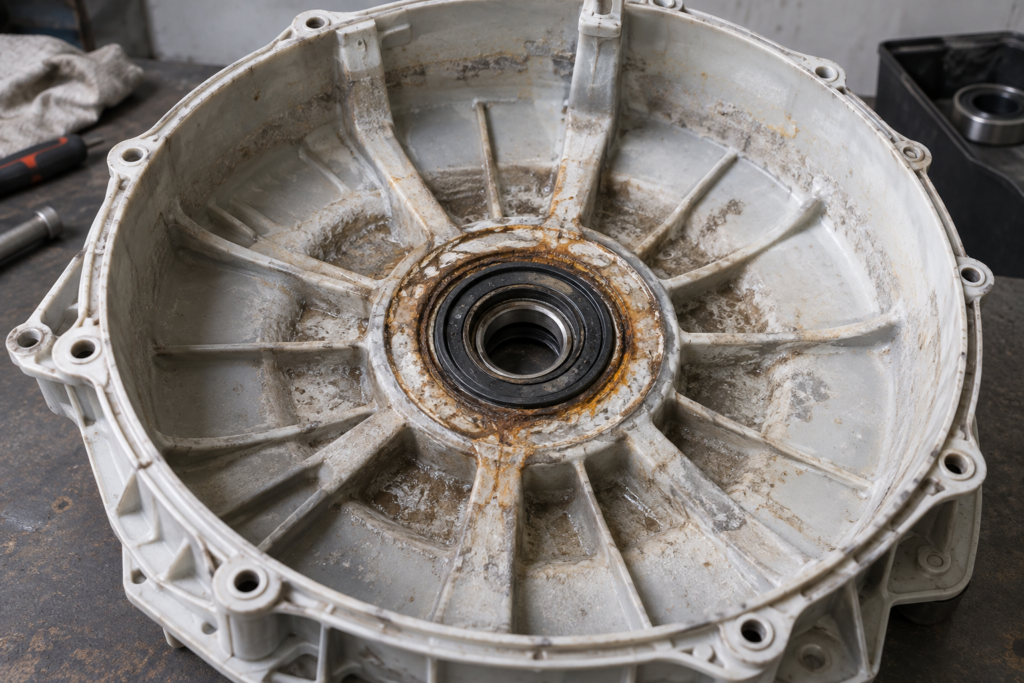
A bearing is a cheap part in a hard place. On a front-load washer it is pressed into the back of the outer tub, behind the drum, the spider arm, the seal, and the pulley. Reaching it means taking the machine apart down to the tub and putting it back together again, and almost the whole bill is the hours that takes.
On many Samsung front-load models the bearing is pressed into a tub half that is not sold as a separate bearing, which makes the serviceable part the tub assembly rather than the bearing on its own. Which of the two applies to your machine depends on the model number, and it is the first thing a technician confirms — it is the difference between the two bottom rows of the table above.
The final price is confirmed after the on-site diagnosis, and you get a written estimate before any work begins.
Telling a Bearing From Everything Else
Front-load washers make a lot of noises, and only one of them is a bearing. The test is whether the sound tracks spin speed.
- A bearing rumbles and the rumble climbs. As the drum accelerates into the final spin the pitch rises with it, then falls away as the machine coasts down.
- A trapped coin or underwire rattles at every speed. It is louder, sharper, and often intermittent.
- Worn shocks bang. The drum hits the cabinet, the machine shifts on the floor, and you may see UE, an unbalanced load detected on the display.
- A failing drive motor does not rumble at all. It reports 3E, a motor or hall sensor fault, and the drum simply refuses to spin up.
There is one physical check anyone can do. With the machine empty and unplugged, grip the drum at the top and bottom and rock it. A healthy drum barely moves. A worn bearing lets it tilt against the seal, and you will often feel a gritty roughness as you turn it by hand.
Waiting Turns One Part Into Three
A bearing does not fail suddenly. It fails over months, and everything around it pays for the delay. The seal goes first, which is what lets water reach the bearing race and rust it. Once the drum is running off center it wears the seal faster, chews at the spider arm behind the drum, and throws the whole basket out of balance on every spin.
That is why the same repair can be a bearing job in the spring and a tub-and-spider job by the fall. If you can hear the rumble from another room, the machine has been telling you for a while.
Water is the other reason not to wait. Once the seal behind the drum lets go, laundry water reaches the bearing race and the back of the tub, and a rust-colored trickle appears under the machine or stains the gasket. People often read that stain as a leaking hose and chase the wrong part for a season. On a washer that also rumbles, a rust trail is the bearing telling you the seal has already failed, and the rest of the repair is now on the clock.
Whether It Is Worth Doing at All
This is the one repair on a washer where the honest answer is sometimes no. The comparison is straightforward once you have real numbers in front of you rather than estimates from a forum.
- Age of the machine. A bearing on a machine still in its first few years is worth doing without much argument.
- What else is worn. If the shocks, the seal, and the spider are going at the same time, you are rebuilding the wet end of the washer, not repairing one part.
- Whether the tub is the serviceable part. Model numbers where the bearing comes only with the tub assembly push the decision harder toward replacement.
- What you would replace it with. A comparable new machine plus delivery, haul-away, and installation is the number worth comparing against, not the sticker price alone.
Our Samsung washer repair vs replace guide works through that decision, and the Samsung washer repair cost guide covers the cheaper faults that sound worse than they are.
Getting a Real Number for Your Machine
A bearing diagnosis takes a few minutes for someone who has done it before: spin the empty drum, listen, rock the basket, and look under the tub for the rust trail that a failed seal always leaves. Our Samsung washer repair service covers the whole drum assembly, bearing and seal included.
Diagnostic work starts from $89. You can book a visit or send us the model number first — on this repair, knowing whether your model takes a bearing or a tub assembly changes the answer before anyone drives out.