 James Crawford
Key Takeaways
- E-27 on a Samsung oven means the temperature sensor has failed and the oven cannot hold its setpoint.
- A sensor is a modest part, and the site rates the typical repair as small next to a new oven.
- Stop cooking if temperatures swing by more than 50 degrees or if E-27 returns in the same session.
- If a new sensor does not stop the erratic readings, the control board is the likely cause.
- A reset can clear the code once, but a cleared code is not a fixed oven.
The Bottom Line
E-27 is usually worth fixing because the sensor is a small part on an oven that is otherwise sound. Try one reset, use a thermometer, and book a diagnostic if the code returns or the board is suspect.
E-27 on a Samsung oven is a temperature sensor failure, and that makes it one of the better oven faults to own. The site's page for the Samsung oven E-27 error rates the typical repair as modest next to the price of a new oven, and the part that fails is the one that tells the control how hot the oven is. The only real question is whether the sensor is the whole story.
| What you find | What it points to | Repair verdict |
|---|---|---|
| E-27 appears once and clears | A passing sensor glitch | Watch it, no repair yet |
| E-27 returns, temperatures swing | Sensor drifting or failing | Worth fixing, a modest part |
| Sensor replaced, readings still erratic | Control board fault | Weigh against the age of the oven |
| Connector pins pitted or intermittent | Poor contact at the board | Worth fixing if the board is sound |
What Does E-27 Mean on a Samsung Oven?
E-27 means the oven's temperature sensor has failed, so the control cannot read the cavity temperature reliably. Without that reading it cannot hold the oven at the setpoint, and you see bakes that run hot, run cool or swing from one to the other.
The sensor is a small probe in the cavity wall, and on many ovens it is among the smaller parts. That is why the verdict leans towards repair, and why a technician can confirm the cost after a diagnosis.
Is a Samsung Oven E-27 Worth Fixing?
Yes in most cases, because a sensor is a small part and a short job, and a new oven costs many times more. The exception is when replacing the sensor does not stop the erratic readings, which points to the control board and changes the maths.
- Fix when the oven is otherwise sound. If the elements, door and display work, a sensor is the whole repair.
- Fix on a younger oven. A built-in oven is costly to swap, and the sensor job keeps the cabinet cut-out as it is.
- Pause if the board is suspect. The page lists readings that stay erratic after a sensor swap as a sign of a board fault.
- Think again on an old oven with several faults. A sensor can be a smaller part, but a board on top of it may not be.
Our guide to whether a Samsung range is worth repairing covers the general age rules, and the oven repair or replace guide goes into the replacement side.
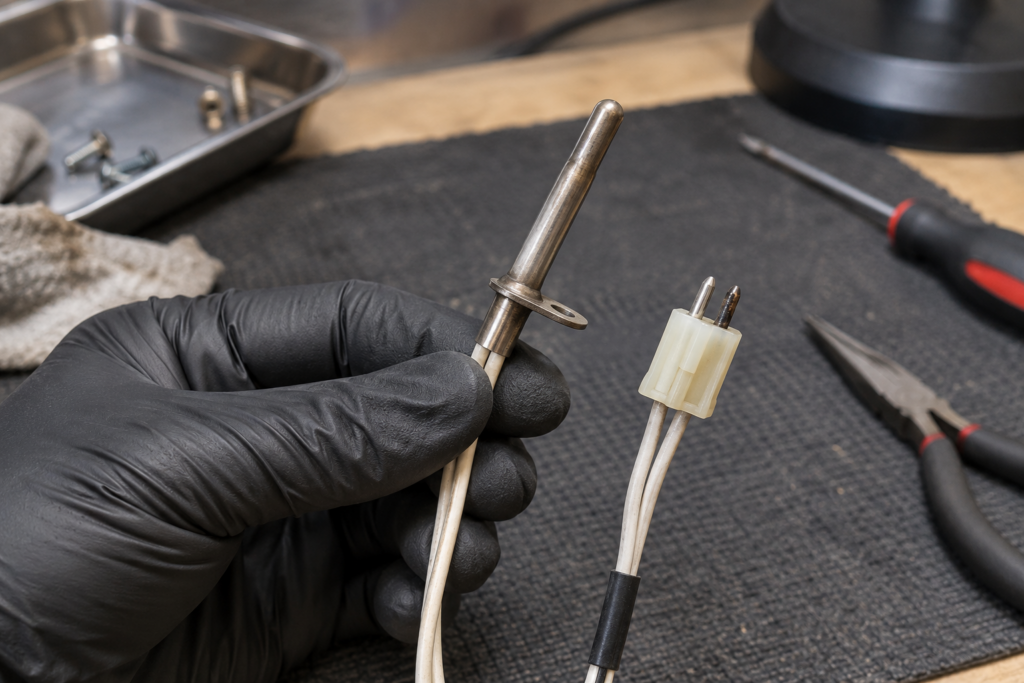
A sensor that reads a few degrees low or high can make bakes brown unevenly or take longer than the recipe says. E-27 may be the oven's way of telling you the sensor has moved from drifting to failing, and a technician can confirm it.
Can You Keep Cooking With E-27?
Maybe, with care. The page rates continued use as a maybe and says to stop if temperatures swing by more than 50 degrees from your setting, or if the code appears more than once in the same session.
- Use an oven thermometer. It tells you what the cavity is doing while the sensor cannot.
- Stop at a swing of 50 degrees. A bake that far off the setting is not safe to rely on.
- Stop at a repeat. E-27 twice in one session means the fault is not a one-off.
- Do not leave it unattended. A sensor that cannot report may let the oven run hotter than set.
Trying a Reset First
Yes, a reset can clear the code, and it is worth trying once. The page says the code can be reset, and a power cycle sometimes clears a passing glitch; if E-27 comes back, the sensor has a real problem.
- Switch the oven off at the circuit breaker and wait a few minutes.
- Restore power and set a bake at a moderate temperature.
- Check the temperature with an oven thermometer as it heats.
- If E-27 returns or the swings are wide, stop and book a diagnostic.
A cleared code is not a fixed oven. Keep an eye on the next few bakes before you trust it again.
If you decide to repair, ask whether the technician will replace the sensor and test the connector in the same visit. Doing both at once avoids a return trip when a pitted connector turns out to be the real cause, and it settles in one go whether the board is involved.
If you decide against repair, remember that a built-in oven also has a cut-out to match. A new oven of a different size can mean cabinet work, which is a cost the oven price does not show.
E-27 Next to the Other Sensor Codes
E-27 is one of several temperature codes on Samsung ovens, and the site separates them. E-08 reports an open or shorted sensor circuit, and TE is a general temperature sensor error that covers a broader range of faults.
All three point to the same area of the oven, so the repair path is similar: test the sensor, check the wiring and the connector, and only then suspect the board. If you are thinking about a clean cycle in the meantime, read our oven self-clean guide first, and do not start one while a sensor code is active.
What Does the Repair Involve?
The job is usually a sensor replacement and a check of the connector at the board, and the page gives about 45 to 90 minutes of technician time. That is a short visit for an oven, and it is one reason the verdict is usually to repair.
- Sensor test: the technician compares the sensor's resistance with the expected value during a controlled heat test.
- Connector check: pitted pins or an intermittent contact at the board can mimic a failed sensor.
- Sensor replaced: the usual repair, and a modest one by the code page's own rating.
- Board only if needed: readings that stay erratic after the swap move the conversation to the board.
Ask for the written estimate before work begins, and ask the technician to explain which of those four outcomes you are in.
What the Diagnostic Settles
The technician tests the sensor against its expected resistance in a controlled heat test, checks the connector pins at the board and looks for erratic readings that survive a sensor swap. The page lists a drift of more than 10 percent from the expected values as a reason to replace the sensor. A diagnostic starts from $89, and the final price is confirmed after the on-site diagnosis, with a written estimate before any work begins.
Our Samsung oven repair service covers the sensor, the wiring and the board. You can book a visit or tell us the model, how far the temperature swings and how often E-27 shows, and we will tell you which row of the table you are probably in.