 James Crawford
Key Takeaways
- E-21 on a Samsung microwave means the door interlock switch system has not confirmed a closed door, so the unit will not run.
- The three causes are debris in the latch, a worn interlock microswitch, and a bent or cracked latch hook.
- Cleaning the latch area and power cycling for two minutes are the safe owner checks; never open the outer case.
- A microwave that is otherwise sound is usually worth fixing, since the parts are small compared with a new unit.
- Stop if the door pops open, will not close securely, or the hooks are visibly damaged, and never bypass the switches.
The Bottom Line
Clean the latch area first. If E-21 persists, the repair is usually worth it on a sound microwave, and not on an old unit with several faults. Never bypass the door switches.
A microwave that will not start and flashes E-21 feels like a small appliance with a small problem, and in money terms it usually is. The code means the control board cannot confirm that the door is closed, and the parts behind that are modest: a couple of microswitches, a latch hook, a bit of grime. What makes the question interesting is that this is a safety circuit, so the fix has to be done properly, and that decides whether repairing it beats buying a new unit.
| What you find | What it points to | Worth fixing? |
|---|---|---|
| E-21 clears after cleaning the latch area | Food or grease blocking the latch hooks | Nothing to repair; clean regularly |
| Door closes with a weak click or bounces back | Worn switch or misaligned latch | Yes, on a microwave that is otherwise sound |
| Cavity light stays on with the door closed | One interlock switch still reads open | Yes; a contained switch repair |
| Latch hooks bent or cracked, door pops open | Physical damage to the door assembly | Depends on the damage; stop using it |
| Older unit with other faults as well | Several parts at the end of life | Compare with replacement |
What Does E-21 Mean on a Samsung Microwave?
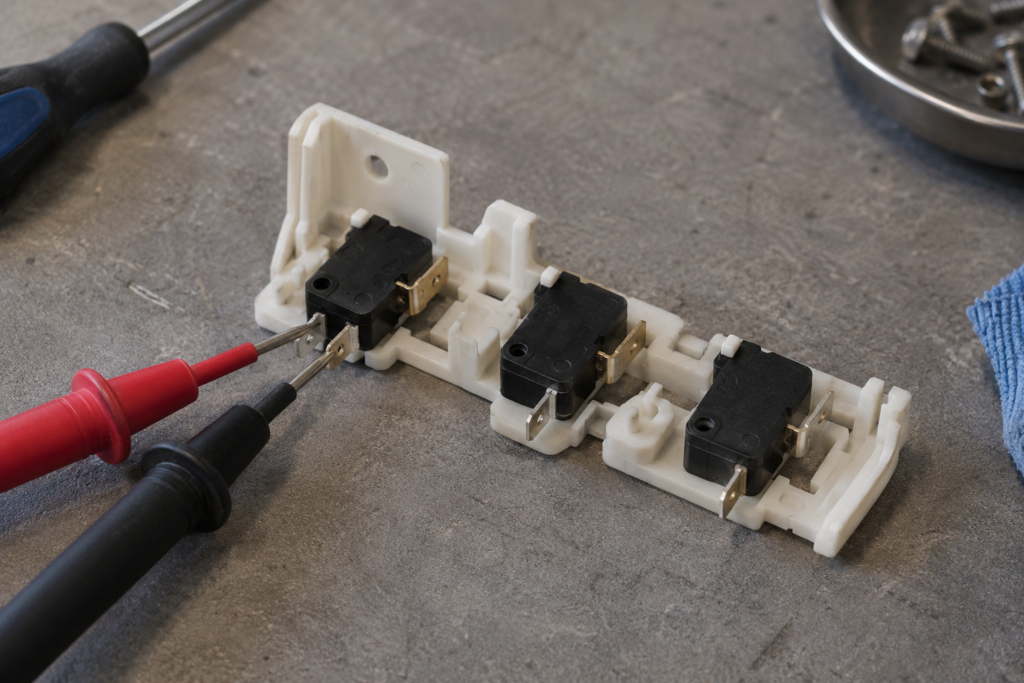
E-21 means the door interlock switch system has not confirmed a closed door, so the microwave refuses to run. The E-21 code page rates it high severity and lists the signs: nothing happens when you press start, the door closes without a firm click, the cavity light stays on with the door shut, or the unit starts and stops within a second or two as the safety check fails.
The interlock exists so the microwave cannot run with the door open. A fault here is the oven protecting you, which is why no one should work around it.
Is Samsung Microwave E-21 Worth Fixing on an Older Unit?
Yes when the microwave is otherwise healthy, because a worn switch or a bent latch hook is a small repair next to the price of a new built-in or over-the-range unit. The code page puts the typical repair from $110, and the work takes a technician a short visit. It is less attractive on a very old microwave with a failing magnetron, a stuck touch panel, or a damaged door, where the combined cost approaches a replacement.
Mounting matters too. An over-the-range unit means a replacement involves a bracket, wiring, and sometimes cabinet changes, which tips the balance further toward repair. Our guide on whether a Samsung microwave is worth repairing covers the whole-appliance decision, and the final price is confirmed after on-site diagnosis with a written estimate before work begins.
The Three Causes, in Order
The code page lists three causes. One is yours to deal with, and two need a technician because they involve parts inside the frame next to high-voltage components.
- Debris in the latch mechanism: food, grease, or cleaner residue stops the hooks from seating fully; this is the one you can clean.
- Worn interlock microswitch: the switches wear after thousands of open-and-close cycles and stop making contact even when the door is latched.
- Bent or cracked latch hook: forceful closing or age damages the hook so it no longer reaches the switch.
Never open the microwave's outer case. It holds a high-voltage capacitor that can store a dangerous charge even when unplugged, and the interlock switches sit right beside it.
What Can You Safely Check Before Booking a Repair?
You can clean the latch area and test how the door closes, and the code page lists both as safe for owners. Nothing here involves removing a panel.
- Open the door and look at the latch hooks and the slots in the frame for damage, bending, or debris.
- Clean the latch area with a damp cloth, and use a flashlight to look into the slots for buildup.
- Close the door slowly and firmly and listen for a clear click.
- Compare how it feels with when the microwave was new; a change in resistance or sound means wear.
- Unplug the microwave for two minutes, plug it in, close the door firmly, and try a short cycle.
If E-21 clears, watch for it over the next few uses. If it persists, if the hooks look bent or cracked, or if the door will not align with its slots, stop and book a visit.
When to Stop Using the Microwave
Stop if the door does not close securely, pops open on its own, or shows visible damage to the latch hooks or the seal. The code page lists these as reasons to stop immediately, and they matter more than the code itself: a door that does not seal properly is a safety problem, not a convenience one.
- Do not tape, wedge, or hold the door closed to force a cycle to run.
- Do not try to bypass the switches; they are the safety circuit.
- Do not run the microwave empty while testing; use a cup of water if you must try a short cycle.
- Keep children away from a unit that will not latch properly.
Our Samsung microwave safety guide sets out the basics for everyday use.
When It Is Not Worth Fixing
When the microwave is old and E-21 is one of several faults. A unit with a worn panel, a magnetron fault, and a damaged door is telling you that its parts are failing together. In that case compare the estimate with a new microwave instead of paying to fix one fault at a time. The neighboring codes, such as E-22 for the door latch motor on convection models and E-11 for the magnetron, are worth reading if you have seen them as well.
Keeping the latch clean afterwards. Most E-21 returns trace back to the same few habits, so a little care keeps the door circuit working. Wipe the frame and the latch hooks whenever you wipe the cavity, because splatter reaches the slots more often than people expect. Close the door with a firm, even push rather than letting it swing or slam, since forceful closing is what bends the hooks. If the door has started to feel loose, act early: a switch that is only beginning to wear is cheaper to replace than one that has already damaged the latch around it. Watch the cavity light as well; a light that stays on with the door shut is the earliest sign that a switch is no longer reading properly.
Getting the Door Circuit Checked
Our Samsung microwave repair service tests the switches, the latch hooks, and the door alignment and tells you in writing which part failed. When you are ready, schedule a visit and mention whether the cavity light stays on with the door closed.