 James Crawford
Key Takeaways
- Samsung microwave overheating tied to the E-11 code means the magnetron itself has reported a failure and should not be reset and used again.
- A microwave stores dangerous capacitor charge even when unplugged, which is why this is one appliance an owner should never open for a home diagnosis.
- E-13, E-21, and E-31 describe related risks — a bad temperature sensor, a door interlock fault, and an inverter fault feeding the magnetron directly.
- Running the oven empty, blocked vents, and back-to-back long cycles are common causes of magnetron overheating over time.
- E-41, a failed turntable motor, is purely mechanical and carries none of this urgency — worth knowing so every microwave code isn't treated the same.
The Bottom Line
Treat E-11 as final: switch off the breaker, do not run another cycle to test it, and do not open the cabinet yourself. A magnetron that has already overheated once does not repair itself between uses.
Samsung microwave overheating is not a symptom to wait out, and one code in particular is the reason why. The magnetron is the single component that produces the microwave energy your oven cooks with, and it is designed to run inside a tightly controlled temperature range. When that range is exceeded, the control reports the E-11 magnetron failure code, and the correct response is to stop using the appliance, not to run one more cycle to see if it clears.
| Code | What the control is reporting | Safe to keep using? |
|---|---|---|
| E-11 | Magnetron failure | No — stop using immediately |
| E-13 | Temperature sensor failure | No — related overheating risk |
| E-21 | Door switch error | No — safety interlock is involved |
| E-31 | Inverter circuit fault | No — powers the magnetron directly |
| E-41 | Turntable motor failure | Yes — mechanical only, not a safety fault |
What Does the Samsung Microwave E-11 Code Actually Mean?
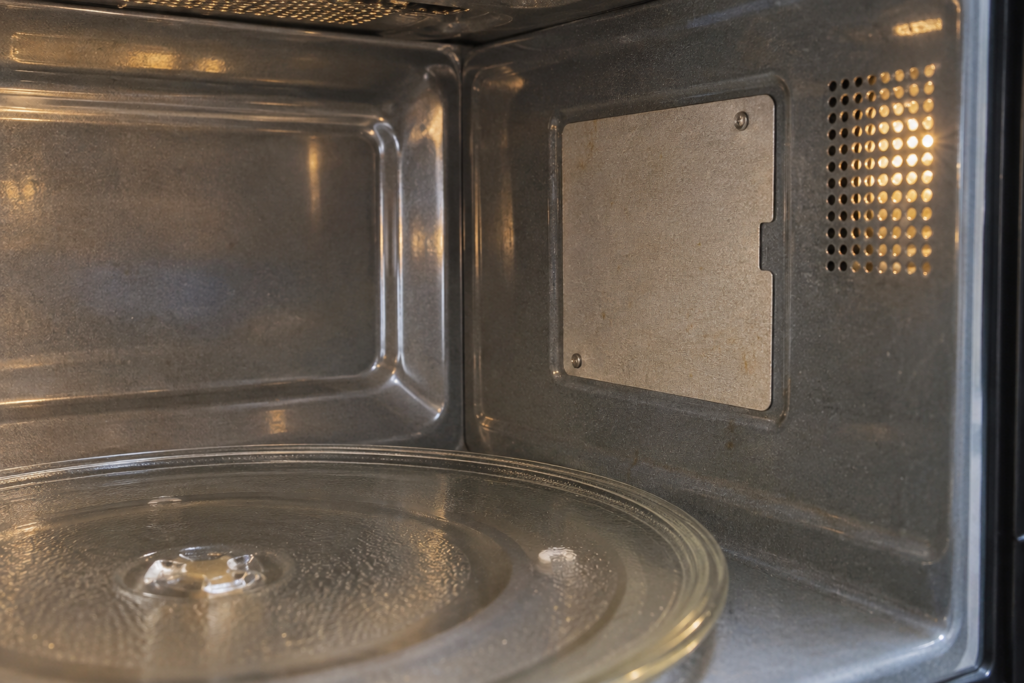
E-11 means the magnetron — the vacuum tube that generates the microwave energy — has reported a failure, and on most units that failure is tied directly to excess heat inside the cavity or the magnetron's own housing. The magnetron sits behind the cavity wall, not visible from inside the oven, which is exactly why an owner rarely sees anything wrong before the code appears: there is no visible spark or smoke until the fault is already serious.
A magnetron that has overheated once is not a component to simply reset and keep using. Heat damage to the tube or its surrounding insulation does not repair itself between cycles, and running the oven again risks the fault progressing to arcing or a scorched cavity wall rather than staying a contained electrical fault.
What Actually Causes a Magnetron to Overheat?
A magnetron rarely fails from age alone. It is far more often pushed past its limit by something restricting the airflow that is supposed to keep it cool, or by running the oven in a way it was never designed for. A few patterns come up again and again on service calls for this exact code:
- Running the microwave empty, even briefly to test it, sends the energy the magnetron produces back into the tube itself with nowhere else to go.
- Blocked vents on the cabinet or the built-in housing trap the heat the magnetron's own cooling fan is trying to remove.
- Long, back-to-back cycles without any rest between them give the tube no chance to shed heat before the next run starts.
- A door seal or interlock that does not close fully can let the magnetron cycle in a way the control never intended, adding stress over time.
Is It Safe to Keep Using a Microwave Showing E-11?
No. Stop using the microwave the moment E-11 appears, switch off the breaker feeding it rather than just unplugging the front panel, and do not run "just one more" cycle to confirm the code is real. A microwave carries a high-voltage capacitor that stores dangerous charge even after the appliance is switched off, which makes it one of the few kitchen appliances where an owner should not open the cabinet under any circumstances, diagnosis included.
If the oven produces a burning smell, visible arcing, or smoke alongside E-11, unplug it immediately and ventilate the kitchen — those signs point at active heat damage rather than a code waiting to be cleared. Even without those more dramatic signs, treat a single E-11 as final rather than something to test twice: the code exists specifically because the control detected a condition it considers unsafe to continue operating through, and it does not report that lightly. Owners sometimes reset the appliance at the breaker and get a normal-looking startup, then assume the fault has cleared itself — it has not; the control simply has not re-run the specific test that caught the overheating in the first place, and the underlying heat damage is still there waiting for the next cycle.
What Else Points at the Same Overheating Risk?
E-11 rarely appears in isolation, and a handful of related codes describe the same underlying risk from a different angle:
- E-13, the temperature sensor fault, means the board can no longer trust the cavity's own temperature reading, which removes one of the safeguards that would normally catch overheating early.
- E-21, a door switch error, matters here because the interlock system is what stops the magnetron from firing with the door open — a fault in that system is treated as seriously as the magnetron itself.
- E-31, an inverter circuit fault, concerns the component that powers the magnetron directly, so a fault there can either starve or overdrive it.
By contrast, E-41 — a failed turntable motor — is purely mechanical and carries none of this risk; the oven can keep heating food safely even though the plate no longer spins, which is worth knowing so you do not treat every microwave code with the same urgency.
What Owners Usually Notice Before the Code Appears
A handful of early signs are worth taking seriously even before a code shows on the display:
- Food takes noticeably longer to heat than it used to on the same setting, which can indicate a magnetron already losing output before it fails outright.
- A burning or electrical smell during or right after a cycle, even a faint one, rather than a food odor.
- A humming or buzzing that changes pitch partway through a cycle, rather than staying steady.
- The exterior housing running hotter than usual to the touch, near where the magnetron sits behind the cavity wall.
- Sparking or flashing inside the cavity with nothing metal present, which points at damage to the cavity's own protective coating.
- The microwave shutting itself off mid-cycle repeatedly, before the timer reaches zero, as an internal thermal cutoff tries to protect the tube.
None of these are things to diagnose yourself by opening the cabinet. They are reasons to stop using the microwave and have it looked at before a working appliance becomes a genuinely damaged one.
What to Do Once You Suspect the Magnetron
Our Samsung microwave safety guide covers the wider set of electrical hazards specific to this appliance, and our microwave error codes guide lists the full set alongside E-11 for context. If you are weighing whether a microwave this old is worth repairing at all once a magnetron fault is confirmed, our is it worth repairing a Samsung microwave guide walks through that decision separately.
Our Samsung microwave repair service handles magnetron, inverter, and interlock diagnosis safely, with the capacitor discharged before any component is touched — a step that is never worth skipping, since that discharge is exactly the part of the job an owner has no safe way to do at home. The diagnostic starts from $89 and is credited toward the repair if you approve the work, with a written estimate provided before anything begins so you know the cost before committing to it. If your microwave has shown E-11, leave the breaker off and book a visit rather than waiting to see whether the code returns on its own.