 James Crawford
Key Takeaways
- DE on a Samsung washer means the door lock failed or cannot be confirmed, so the cycle will not run.
- The common causes are a sock or wire in the door seal, a misaligned striker and a failed lock actuator.
- Never tape the door shut or bypass the lock, because it stops the door opening on a spinning drum.
- Clear the seal, test the latch and unplug the washer for two minutes before booking.
- If there is no click, DE returns at once or the lock smells of burning, call a technician.
The Bottom Line
DE is usually a door seal or latch problem you can check in minutes, and a failed lock actuator when it is not. Clear the gasket, test the click and power cycle once, then book a diagnostic.
A Samsung washer DE error means the machine cannot confirm that the door is locked, so it refuses to start, or stops, a cycle. The site's page for the Samsung washer DE code lists a small set of causes, from a sock caught in the door seal to a worn lock actuator, and the first two checks take about five minutes and no tools.
| What you notice | What it usually means | First move |
|---|---|---|
| Pressing Start does nothing, DE appears | Control cannot confirm the lock | Check the door seal for trapped items |
| Door closes with no firm click | Lock mechanism not engaging | Close it slowly and listen for the latch |
| DE1 or DE2 on the display | A variant of the door error | Treat the same way, then note the variant |
| Door opens during a running cycle | Lock released mid-cycle | Stop the washer and do not run it |
| Click is normal but DE keeps returning | Electrical fault in the lock | Book a diagnostic |
What Does the DE Code Mean on a Samsung Washer?
DE means the door lock failed, so the washer cannot start or continue a cycle. The lock is a safety feature that keeps the door shut while the drum is full of water and spinning, and the control board will not run the washer until it gets confirmation that the lock is engaged.
The code can appear as dE, DE1 or DE2. The site's page treats these variants as one family of door faults that block the cycle until the lock is confirmed, so the checks are the same whichever one you see.
A washer that locks its door is doing what it was built to do. After the cycle ends the lock releases, and you should be able to open the door within a short time. If the door will not release or will not lock, the washer cannot tell which state it is in, and it stops rather than guess.
Is It Safe to Use a Washer With a DE Error?
No, do not run it, and never bypass the lock. The page says not to tape the door shut or defeat the lock, because that is the part that stops the door opening on a drum of spinning water.
- No tape and no jumpers. A door held shut by tape is not locked, and the control cannot tell the difference.
- Stop if the door opens mid-cycle. That means the lock has released while the drum is full.
- Stop at buzzing without latching. A buzz or click from the lock area with no latch suggests a failing lock.
- Keep the washer unplugged if it is acting oddly. It costs nothing and prevents an unexpected start.
The Three Causes of a DE Error
Three causes are listed on the code page, and two of them you can check yourself. That is why DE is one of the friendlier washer codes: the cheapest cause is also the most common one.
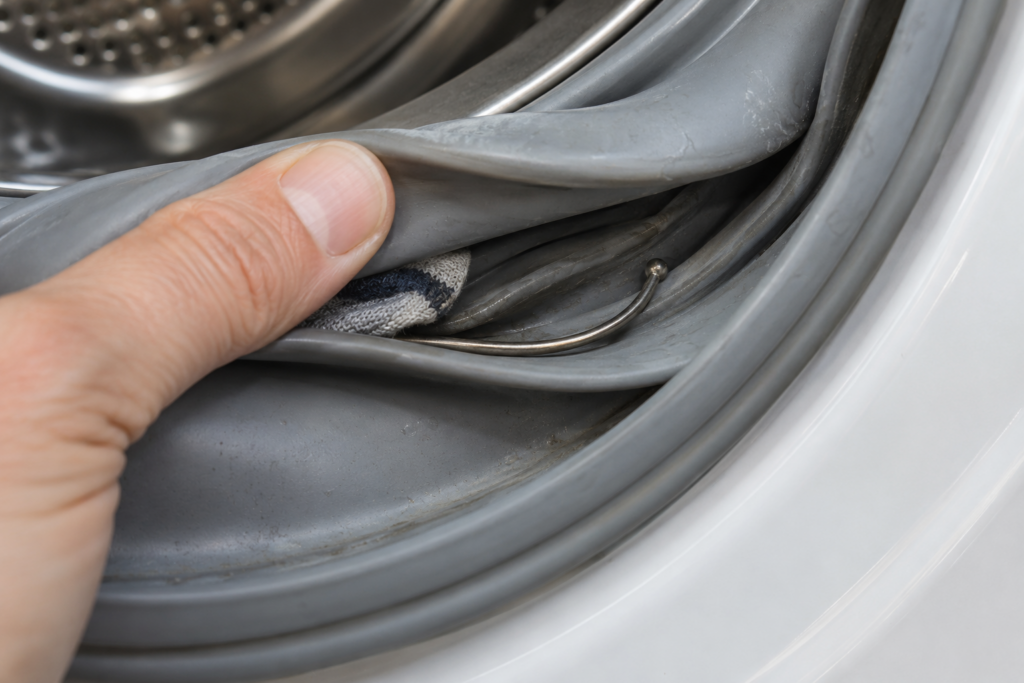
- Obstruction in the door seal. A sock, a bra wire or a small item wedged between the gasket and the frame stops the door closing fully against the lock.
- Misaligned striker or sagging hinge. The metal hook on the door can bend from forceful closing, and an older door can sag, so it no longer lines up.
- Failed lock actuator. The solenoid or bi-metal switch in the lock assembly wears out and no longer engages or reports back, which needs a technician.
Detergent buildup along the gasket can add to the first cause, and so can an overstuffed drum that pushes laundry into the opening. A seal that is sticky or dirty may not let the door close cleanly, so a wipe of the rubber is worth doing every time you check.
Safe Checks You Can Do
Clear the seal, test the latch, then power cycle the washer. These are the three safe checks on the code page, and they need no panel removed.
- Open the door and run your fingers along the whole rubber gasket, feeling for trapped clothing, debris or detergent buildup.
- Fold back the lip of the gasket and check the hidden groove, where small items often lodge.
- Close the door slowly and firmly, listen for the click of the latch and press at different points to see if alignment changes the result.
- Unplug the washer for two minutes, plug it in and try a cycle.
If the lock clicks but the code still appears, the page says the issue is likely electrical and not mechanical. If the code clears but returns on the next cycle, the lock assembly needs replacing.
Prevention is mostly habit. Glance at the gasket before you close the door, check pockets for loose items and wire, and close the door with a firm, even push and not a slam. A door that is slammed repeatedly may stress the striker over time, which is the second cause on the list, and a sagging hinge on an older machine is worth mentioning at your next service visit.
Keep a note of the variant you see. If it is DE on Monday and DE1 on Friday, that is useful to the technician, since the variants can point to different parts of the lock circuit.
When a Technician Is Needed
When the latch does not click at all, when DE appears at once on every start whatever the door position, or when you smell burning near the lock. The page lists those three as the signs that the lock assembly or its wiring has failed.
- No click when pressed shut: the lock is not engaging mechanically.
- DE immediately every time: the control is not seeing a lock signal at all.
- Burning smell at the lock: an overheated solenoid needs attention before the washer is used again.
The page puts the typical repair from $120 and about 30 to 60 minutes of technician time. The final price is confirmed after the on-site diagnosis, with a written estimate before any work begins, and the wider range of washer bills is in what Samsung washer repairs cost.
How Is DE Different From the DC Code?
DE is a lock fault, while DC only says the door was opened during a cycle. DC is informational: close the door and press Start, and the cycle carries on.
If your washer stops before spinning for another reason, our guide to a Samsung washer that is not spinning covers the other causes, and the washer maintenance guide shows how to keep the gasket clean.
Getting It Fixed
Our Samsung washer repair service covers the lock actuator, the striker and the door wiring. You can book a visit or tell us which variant shows and whether the latch clicks, so the technician arrives with the right lock assembly for your model.