 James Crawford
Key Takeaways
- The lower edge of the door gasket and its groove collect film, crumbs and moisture, which cause odor and dark spots.
- Wipe with a soft cloth and warm, mildly soapy water, then dry; avoid abrasives and harsh chemicals.
- Run your fingers along the gasket to feel for tears, gaps and flat spots; light through the seam means a gap.
- A torn or deformed gasket is a listed cause of the LE leak code and is DIY-possible to replace.
- Use only dishwasher detergent, never hand soap, and stop if water pools under the unit.
The Bottom Line
A clean, flexible gasket keeps odor and small leaks away. Wipe it, clear the groove, inspect it every few months, and replace it before it fails.
Regular Samsung dishwasher door seal cleaning removes the film that causes odor and helps the gasket keep water inside. The seal also shows up in our Samsung dishwasher LE error page, which lists a torn or deformed door gasket as a cause of leaking and calls it a DIY-possible fix.
| Area | What builds up | How often to clean |
|---|---|---|
| Lower edge of the gasket | Food film, detergent residue, water | Wipe every week or two |
| Groove the gasket sits in | Grime, mold spots, trapped crumbs | Monthly |
| Door edge and tub rim | Splashes and mineral spots | With the gasket |
| The gasket itself | Cracks, flattening, hardening | Inspect every few months |
Cleaning is cheap and quick, and it is also an inspection. Every time you wipe the gasket you look at it, and a crack that appears in a month is easier to deal with than a leak that appears in a year. That small habit is the main benefit of the routine.
Why Does the Door Seal Need Cleaning?
Because the lower edge holds a thin layer of water and food all the time, and that film is where odor and dark spots start. A clean, flexible gasket also seals better, which is what keeps the door from weeping during a cycle.
The LE page says the rubber gasket deteriorates with age and can develop cracks, tears or permanent compression that let water seep past during the wash. Cleaning does not repair that, but it keeps the surface supple enough to last, and it lets you notice damage early.
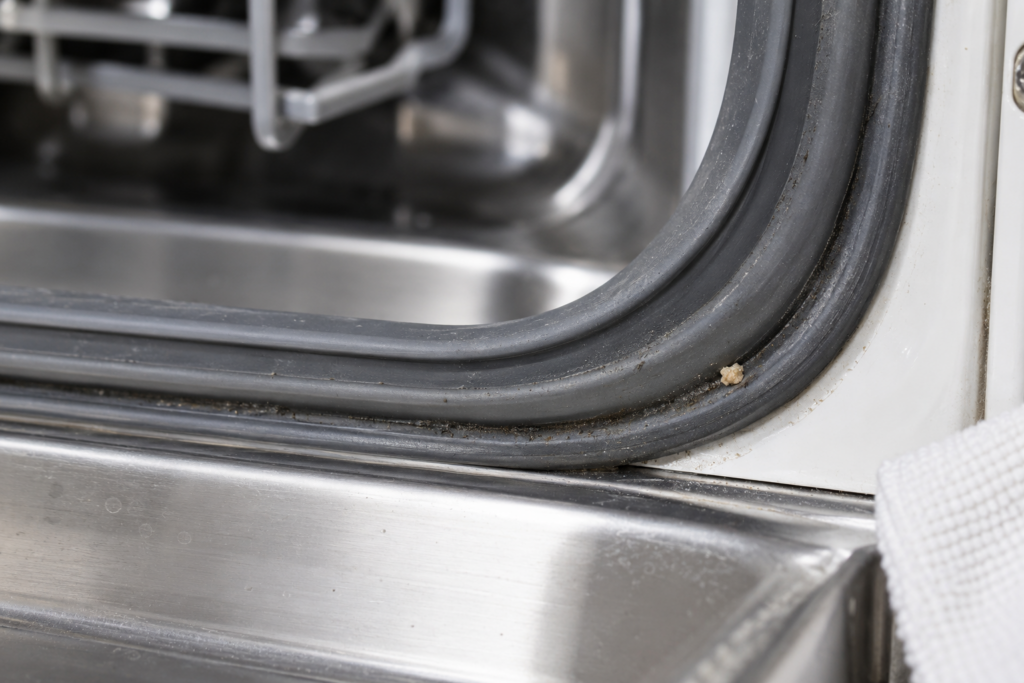
How Do I Clean a Samsung Dishwasher Door Seal?
Wipe it with a soft cloth and warm, mildly soapy water, then dry it. Work gently along the full length of the gasket, and pay attention to the lower edge where the film collects.
- Open the door fully. Make sure the dishwasher is empty and has cooled.
- Wipe the gasket. Use a soft cloth and warm water with a drop of dish soap.
- Press into the groove. Run the cloth along the groove the gasket sits in, and remove trapped crumbs.
- Rinse the cloth and wipe again. Remove soap residue so it does not foam in the next cycle.
- Dry and leave the door ajar. Air helps stop moisture building up.
Avoid abrasive pads and harsh chemicals, which can scratch or harden rubber. Check your owner's manual for any cleaner Samsung recommends for your model.
Smell and Dark Spots on the Seal
A musty smell or dark spots in the groove mean moisture and food have been sitting there, and a careful clean usually removes them. Take extra time on the groove, where the cloth cannot reach as easily, and use a soft brush if you need to.
- Use a soft brush. An old soft toothbrush reaches the groove without cutting the rubber.
- Dry afterward. Mold needs moisture, so removing it is half the cure.
- Run a hot cycle. After cleaning, run an empty cycle so any loosened residue rinses away.
- Check the filter too. A dirty filter also causes odor, so look there if the seal is clean.
Our guide to Samsung dishwasher maintenance tips shows the other regular jobs that keep smells away.
The groove is the part most owners miss. The gasket sits in a channel, and food and grime collect behind and under it where a cloth does not reach. A cotton swab or a soft brush works there. If you find a crumb trapped in the channel, remove it, because a small obstruction can stop the gasket from sitting flat.
Do not remove the gasket for cleaning unless your owner's manual says it is designed to come out. A gasket that is pulled and refitted badly can leak worse than one left alone.
How Do I Tell If the Gasket Is Worn?
Run your fingers along the whole gasket and feel for tears, gaps or flat, hardened areas. The LE page recommends exactly this, along with closing the door and looking from outside, since light showing through indicates a gap.
- Cracks or tears. The rubber has split and will leak.
- Flat or compressed sections. The gasket no longer springs back.
- Light through the seam. A gap with the door closed means water can escape.
- Debris stuck in the seal. Remove it and check again.
A worn gasket is a small part compared with the floor damage a leak can cause, so replace it early rather than late.
Placement of the leak helps. Water that appears at the front edge of the door, near the gasket, points to the seal. Water that appears in the middle under the unit points to hoses, connections or the base. That one observation tells the technician where to start and tells you whether a gasket replacement is likely to be enough.
When Does a Seal Problem Become a Leak?
When water appears on the floor or the display shows LE, the seal is no longer the only thing to think about. The page says not to keep running the dishwasher with an active LE, since leaking can damage floors, cabinets and the subfloor, and water near electrical parts is a shock hazard.
- Stop the dishwasher and switch the breaker off.
- Check for water pooling in front of or beside the unit.
- Check the detergent: only dishwasher detergent, never hand soap, which creates suds that overflow.
- Inspect the gasket as above.
- If the leak seems to come from underneath, call a technician.
Our guide on Samsung dishwasher water leak prevention explains the wider steps.
Detergent matters for the seal as well. Use dishwasher detergent only, since the LE page warns that even a little hand soap makes large amounts of suds that overflow past the door. If hand soap got in, run several empty rinse cycles to flush it out before resuming normal use.
One last habit costs nothing: after you unload, glance at the lower edge of the gasket and the floor of the tub. A damp film, a stray crumb or a drip of water there is easier to deal with in the moment than a week later, and it keeps the routine short.
A Simple Routine to Keep the Seal in Shape
A small, regular routine is enough: wipe the lower edge every week or two, clean the groove monthly and inspect the gasket every few months. Keep the door slightly open after a cycle on humid days, and use only dishwasher detergent.
If the seal is fine and the dishwasher still leaks, the cause is inside, and that is a technician's job. The diagnostic starts from $89, and the final price is confirmed after the on-site diagnosis, with a written estimate before any work begins. Our Samsung dishwasher repair service covers gaskets, hoses and seals, and you can book a visit or tell us where the water appears.