 James Crawford
Key Takeaways
- A Samsung dishwasher LE error code means water has reached the base pan and lifted the float switch; it is rated high severity on this site.
- Do not keep running the dishwasher with an active LE code; leaking water can damage flooring, cabinets, and the subfloor.
- The three causes on the code page are a torn door gasket, a loose internal hose connection, and a worn wash motor shaft seal.
- Hand dish soap can cause suds that overflow and look like a leak; run empty rinse cycles to flush it.
- Resetting clears the display only; LE returns if the leak has not been fixed.
The Bottom Line
Treat LE as a real leak until proven otherwise: stop running the dishwasher, close the supply valve, and check the gasket and the detergent. If LE returns or the water comes from underneath, book a visit.
A Samsung dishwasher LE error code means the machine has detected water where it should not be, and it is one of the few codes on the dishwasher that should stop you from running another cycle. This site keeps a full list of codes on its Samsung dishwasher error codes page; this guide follows the one code that involves water on your floor, using what the LE code page says about causes and safe checks.
| What you notice | What it points to | What to do first |
|---|---|---|
| LE shown, water on the floor in front | Leak at the door gasket | Stop; feel the gasket for tears and flat spots |
| LE shown, floor dry at the front | Water collecting in the base pan | Close the supply valve; do not run it again |
| LE after using hand dish soap | Suds overflowing, not a leak | Run empty rinse cycles to flush the soap |
| Drain pump running non-stop with LE | Emergency drain after the float switch rose | Switch off at the breaker |
| Musty smell from under the machine | Slow leak that has been going on a while | Book a diagnosis |
What Does the Samsung Dishwasher LE Error Code Mean?
LE means a water leak has been detected: water has reached the base pan under the tub and lifted a float switch, which tells the control board to stop. The code page rates it high severity, and its symptoms are the ones you would expect: water pooling on the kitchen floor in front of or beside the dishwasher, a cycle that halts mid-wash, and a drain pump that runs continuously as the machine tries to get rid of the water. A musty smell from under the machine can mean a small leak has been going on for some time.
The float switch exists to protect your floor, so the code is the machine doing its job. What matters is finding where the water came from before it is run again.
Is It Safe to Keep Running a Samsung Dishwasher With an LE Code?
No. The code page says plainly not to keep running the dishwasher with an active LE error, because continued leaking can damage flooring, cabinets, and the subfloor, and water near electrical parts creates a shock hazard. Keep the supply valve under the sink closed and leave the machine unused until the source is found.
- Stop active dripping first: if water is still flowing from under the dishwasher, switch it off at the breaker.
- Look at the flooring: warping or discoloration near the dishwasher means water has been there for a while.
- Do not run another cycle to test it, since each test can put more water into the base pan.
- Dry the floor and the area around the door so a fresh puddle is easy to spot.
The Three Causes on the Code Page
The page lists three causes, in order of how common they are. The first is a job for you; the other two need a technician.
- A torn or deformed door gasket: the rubber seal cracks, tears, or takes a permanent set with age, and water seeps past during the wash.
- A loose internal hose connection: clamps on the fill, drain, or recirculation hoses loosen from vibration and drip at the joint.
- A worn wash motor shaft seal: the seal around the motor shaft wears over years and lets water into the base pan.
The pattern of the leak points to the cause. Water at the front of the door during the wash is most often the gasket. Water that appears only after the machine has run for a while, and shows up under the base rather than at the door, points at a hose or the motor seal.
Checks You Can Do Without Opening the Machine
Two checks come straight from the code page, and both are safe for an owner because nothing is removed. Do them with the machine switched off.
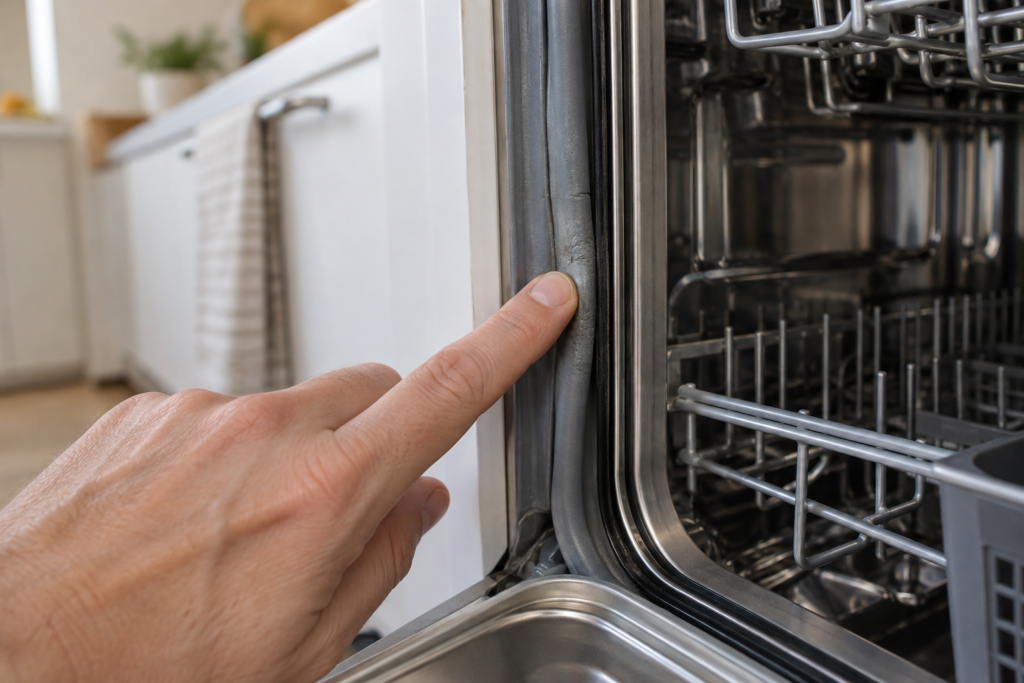
- Run your fingers along the whole door gasket, feeling for tears, gaps, and places where the rubber is flat or hardened.
- Look for food stuck in the seal, which can stop the door closing fully and let water out.
- Close the door and look at the seal from outside; light showing through is a gap.
- Confirm the detergent is made for dishwashers in tablet, powder, or gel form, never hand dish soap.
- If hand soap was used, run several empty rinse cycles to flush out all of the suds before normal use.
Even a small amount of hand soap creates a mass of suds that overflows through the door seal and looks like a leak. If suds were the cause, the code should not return after the flush.
Can You Reset the LE Code?
Yes, but only after you have dealt with the cause, because the code returns if the leak is still there. The page says to tilt the dishwasher slightly forward to drain any water from the base pan, then power cycle at the breaker; if the float switch settles back down, the code clears. That is a reset, not a repair.
If LE comes back after you have checked the gasket and the detergent, or the leak seems to come from underneath and not from the door, stop and call. Water in the base pan when the lower access panel is removed is another clear reason to book a visit.
While You Wait for the Repair
A few small steps limit the damage and make the visit shorter. None needs tools, and all of them are safe with the dishwasher switched off.
- Close the supply valve under the sink so no more water can enter the machine.
- Mop up any water and check whether it reached the cabinet beside the dishwasher.
- Leave the door ajar so the tub and the gasket dry out and the smell does not build.
- Write down when LE appeared, which cycle was running, and what detergent was used.
If the dishwasher sits on a hardwood or vinyl floor, check the floor again after a day. A slow leak can lift boards or cloud the surface well after the puddle is gone, and early notice helps with any insurance question.
When to Call and What to Tell Us
Describe where the water appeared, when in the cycle it started, and what detergent you used. That narrows the cause before the technician arrives. Our Samsung dishwasher repair service checks the gasket, the hoses, and the motor seal, and gives you a written estimate with the final price confirmed after on-site diagnosis. Our dishwasher leak prevention guide covers the longer-term habits, and a dishwasher that is not draining is a different fault with its own steps. When you are ready, schedule a visit.