 James Crawford
Key Takeaways
- Samsung dishwasher filter cleaning takes about ten minutes and is the most useful maintenance job on this machine.
- The filter sits at the bottom of the tub under the lower spray arm; check your use-and-care guide for how your model releases it.
- Clean it monthly by default, every two weeks with heavy use, and never run the dishwasher without it.
- A clogged drain filter is the first cause listed for the 5E drain error on this site.
- White crust on the mesh is hard water scale; a vinegar soak and a soft brush deal with it.
The Bottom Line
Clean the filter monthly, seat it fully, and never run the machine without it. If 5E or standing water continues after a clean filter, check the hose and the drain pump.
Every grain of food that leaves a plate ends up in one place: the filter at the bottom of the tub. When it is clean, the wash water is clear, the drain pump runs quietly, and dishes come out spotless. When it is not, you get gritty glasses, a sour smell, and eventually standing water and an error code. Samsung dishwasher filter cleaning takes about ten minutes, needs no tools, and is the single most useful maintenance job on this machine.
| What you notice | What the filter is probably doing | What to do |
|---|---|---|
| Gritty film on glasses | Trapped food recirculating in the wash water | Clean the filter now |
| Sour or musty smell when you open the door | Food decaying in the filter and sump | Clean the filter, then run a hot cycle |
| Water still standing after the cycle | Filter clogged enough to slow the drain | Clean it; if water stays, the pump is next |
| 5E on the display | Drain error, often a clogged filter | Filter and hose first |
| White crust on the filter mesh | Hard water scale | Soak, then brush gently |
Where Is the Filter in a Samsung Dishwasher?
It sits at the bottom of the tub, under the lower spray arm, in a recess that collects water before it goes to the pump. On most Samsung dishwashers the filter is a cylinder or cup that you lift out after removing the lower rack, sometimes with a twist, and a finer mesh screen sits around or beneath it. The exact design varies by model, so check your use-and-care guide for how yours comes out, and never force a part that does not release easily.
If you cannot find it, remove the lower rack and look at the floor of the tub. The filter is the round or oval piece with fine holes in the middle, and the grid or ring around it is part of the same assembly.
How Often Does Samsung Dishwasher Filter Cleaning Need to Happen?
Once a month is a good default, and every two weeks if you run the dishwasher daily or rarely rinse plates. A household that scrapes dishes carefully and runs a couple of loads a week can stretch it to every six weeks. The sign that you have waited too long is a smell or a gritty film, and by then the filter is already full.
- Heavy use or unrinsed plates: every two weeks.
- Typical family: once a month.
- Light use: every six weeks, with a smell check in between.
- After cooking with bones, seeds, or rice: look at the filter that same evening.
The Cleaning Routine, Step by Step
Do this with the dishwasher empty and switched off. It is safe, it needs warm water and a soft brush, and it leaves no residue.
- Remove the lower rack and set it aside so you can see the floor of the tub.
- Lift out the filter assembly, twisting only if the design calls for it, and separate the cup from the mesh.
- Tip the debris into the trash, not into the sink, where it can clog the drain.
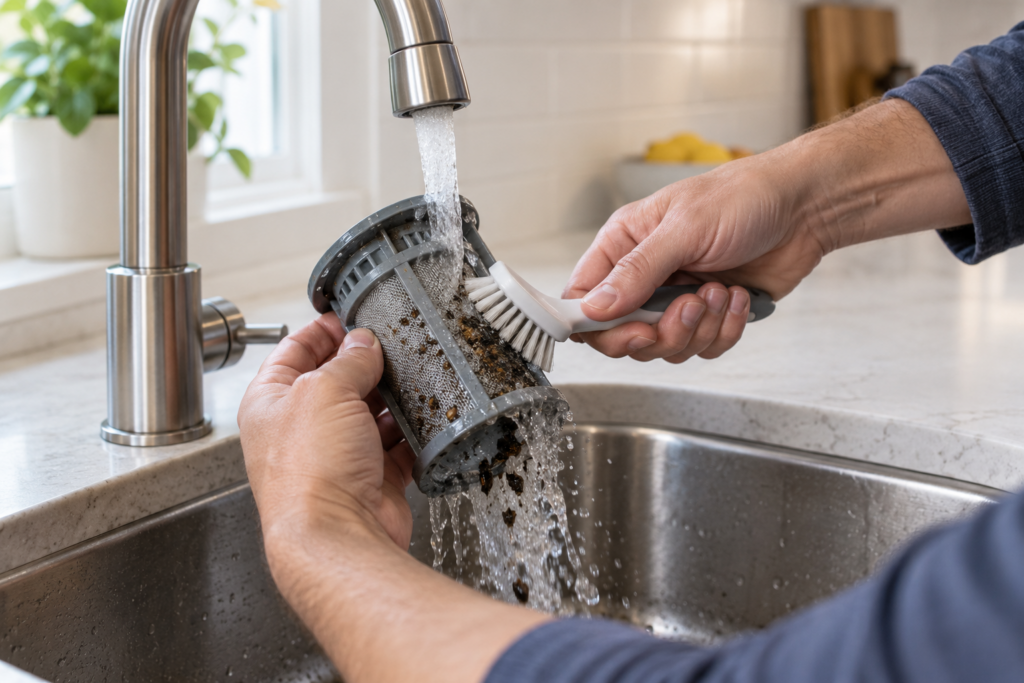
- Rinse both parts under warm running water, then scrub gently with a soft brush or an old toothbrush.
- Look into the sump with a flashlight for glass chips, bones, or small objects, and lift out anything you find.
- Wipe the tub floor around the opening with a damp cloth.
- Refit the mesh and the cup fully seated, so the assembly sits flat and locks if the design has a lock.
- Replace the lower rack and run a short, hot cycle with nothing inside.
Never run the dishwasher without the filter. Without it, food reaches the pump, which is a far more expensive part than the filter you left out.
Can a Dirty Filter Cause the 5E Error?
Yes, a clogged filter is the first cause listed for the 5E drain error on this site. The Samsung dishwasher 5E page describes the symptoms as standing water in the tub, dirty water around the lower rack, a foul smell, and a cycle that stops at the drain phase. Its safe-check advice is the one you would expect: clean the drain filter, clear the hose, then press Start or power cycle the machine, and the code clears once water drains.
- Code gone after cleaning: the filter was the cause and your routine is working.
- Code stays and water still stands: check the drain hose for a kink or a clog, then suspect the drain pump.
- Grinding or screeching from the pump: stop running the machine and book a visit.
- Water leaking under the dishwasher: stop, close the supply valve, and see our leak prevention guide.
Hard Water, Detergent, and Scale on the Filter
White crust on the mesh is mineral scale, not food. Hard water leaves scale on the filter, the spray arms, and the tub walls, and it narrows the holes the water has to pass through. A monthly soak of the filter parts in a bowl of warm water with a splash of white vinegar softens it, after which a soft brush removes it. Use the right amount of detergent as well; too much leaves a film that traps food in the mesh.
Check the spray arm holes while you are in there. If any are clogged with grit or seeds, clear them with a toothpick, since blocked arms leave the same dirty dishes a clogged filter does. For the wider routine, our Samsung dishwasher maintenance tips add door seal care and cycle habits.
Habits That Keep the Filter Cleaner Between Jobs
A few small habits stretch the time between cleanings and make each one easier. None of them costs anything, and together they make the dishwasher quieter and the dishes cleaner.
- Scrape, do not rinse, large food scraps into the trash before loading, since big pieces end up in the filter.
- Run the hot tap until it is warm before starting a cycle, so grease dissolves instead of coating the filter.
- Leave the door ajar after a cycle for an hour to let moisture escape and reduce odors.
- Use a rinse aid and the correct amount of detergent, since the wrong amount leaves a film.
When Cleaning Is Not Enough
If the filter is clean and the dishwasher still will not drain, the cause is further down the line. Our guide to a Samsung dishwasher not draining covers the hose, the air gap, and the pump. A technician from Samsung dishwasher repair can also fold filter care into a preventive maintenance visit. When you are ready, schedule a visit; the final price is confirmed after diagnosis, with a written estimate before any work begins.